Cosmetic dentistry in Bratislava
A chipped corner, a gap between the front teeth or uneven edges can be corrected with tooth-coloured composite — often without drilling, in one or two visits.
Composite bonding and veneers
We apply composite to the tooth in layers and shape it directly in the mouth, so you see the result before you leave the chair. Bonding can change a tooth's shape, length or colour; when the composite covers the whole front surface, it is called a composite veneer. The healthy tooth usually doesn't need drilling.
Closing a gap between teeth
A small gap between the front teeth (a diastema) can often be closed by bonding composite to the sides of the teeth. For a larger gap or crooked teeth, we'll explain whether a different treatment would suit you better.
Tooth splinting
Loose teeth — for example due to gum disease or after an injury — can be joined with a thin splint bonded to their inner surface. It stabilises them and protects them from loosening further.
Whitening
If you want your teeth lighter overall, we start with whitening — the composite is then colour-matched to your whitened teeth.
Example result
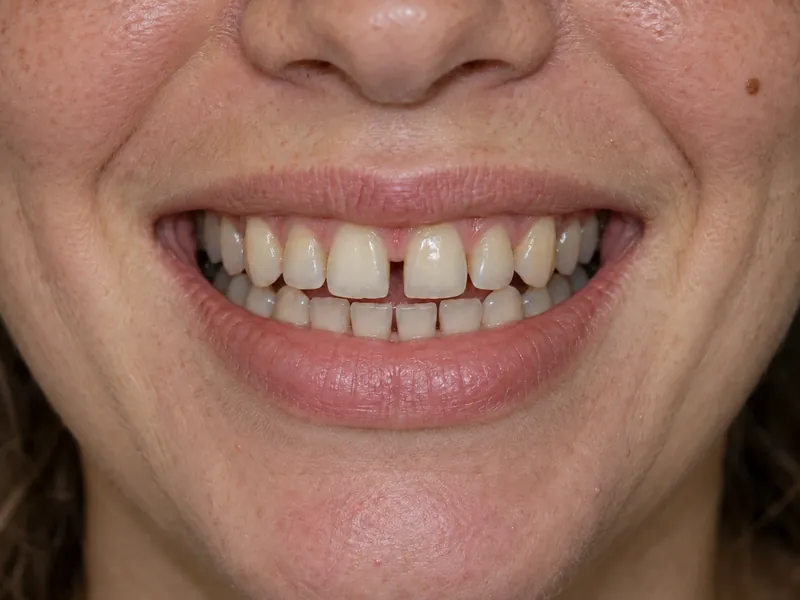 Before
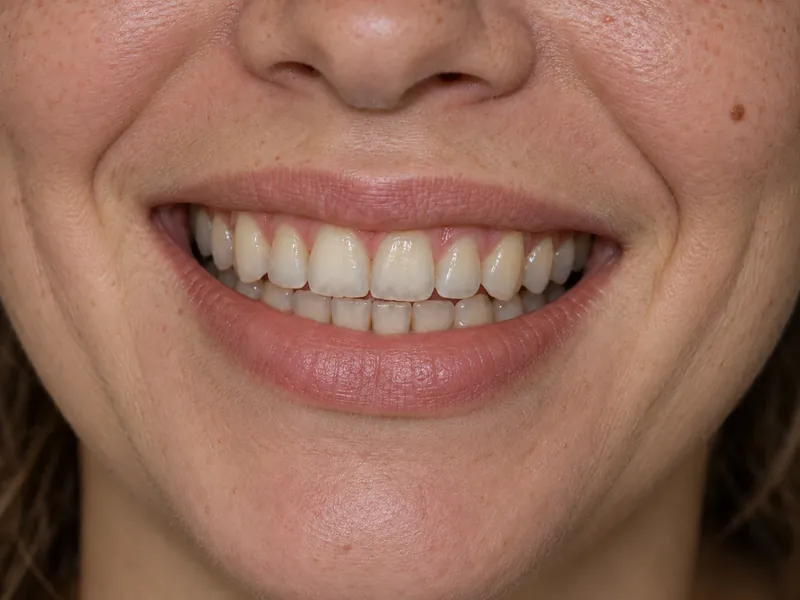 After
AfterFrequent questions
What are composite veneers?
A thin layer of tooth-coloured composite covering the front surface of a tooth. It improves both shape and colour and is usually done without drilling, right in the practice.
How long does composite bonding last?
Usually 5 to 7 years or longer. Composite can be re-polished or repaired later without replacing the whole restoration.
Are veneers possible without drilling?
With composite bonding and veneers, usually yes — the composite bonds straight to the enamel. We'll confirm whether it's possible in your case at the examination.
Can a gap between teeth be closed without braces?
A small gap can often be closed with composite bonding in a single visit. For a larger gap or crooked teeth, we'll tell you what the options are.
Does composite stain from coffee?
Composite can darken on the surface over time, especially with coffee, tea and smoking. Regular dental hygiene and an occasional polish restore its shine.
What is tooth splinting?
Joining loose teeth with a thin splint bonded to their inner surface. It's used when teeth are loose because of gum disease or after an injury.